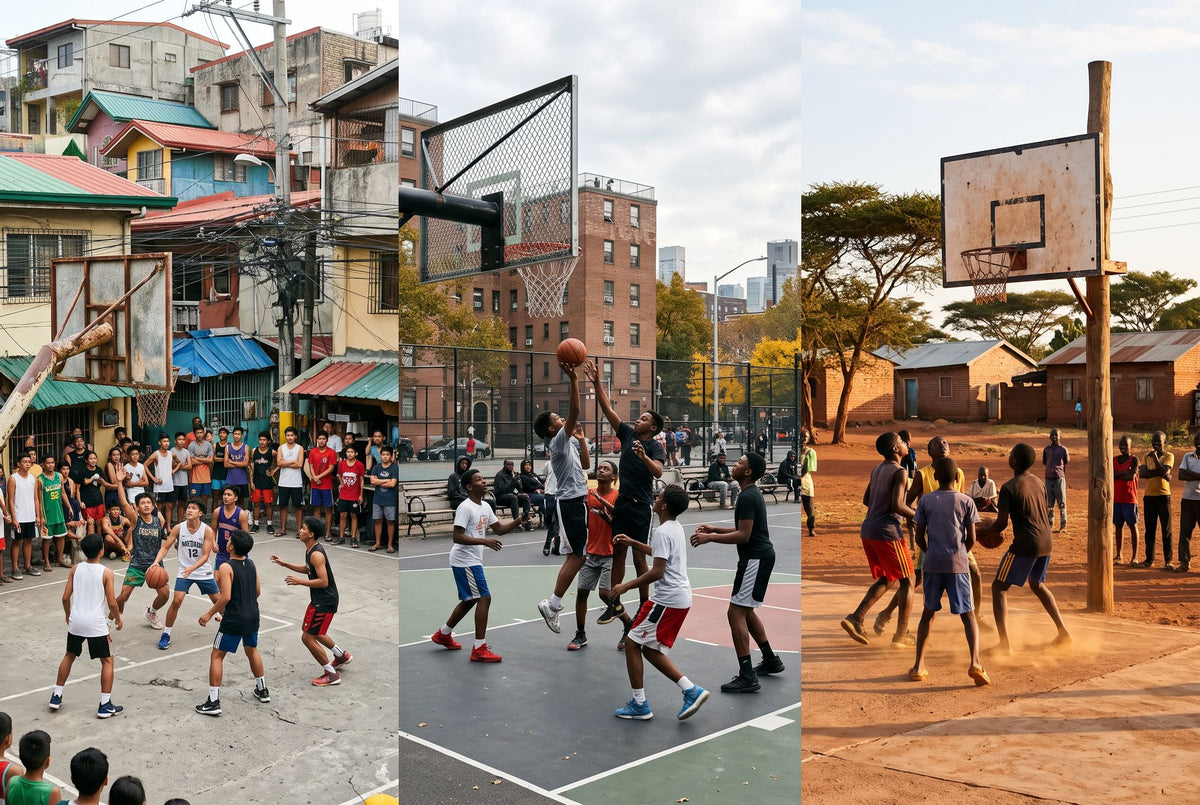
Walk through a park in Manila, a playground in Paris, or a neighborhood in Chicago, and you will hear the exact same rhythm: the steady thud of a bouncing ball, the squeak of sneakers on concrete, and the rattle of the rim. Basketball has transcended its North American roots to become a universal language. For teenagers aged 13 to 18, it consistently ranks as one of the most popular sports on the planet. But what exactly is driving this global hardwood revolution?
The Beauty of Accessibility
Unlike sports that require expensive protective gear, specialized ice rinks, or manicured grass pitches, basketball thrives on simplicity. The barrier to entry is incredibly low—all a teenager needs is a ball and a hoop. In densely populated urban centers across Europe, South America, and Asia, a single half-court can host dozens of players rotating in for pickup games. This low-friction accessibility makes it the perfect after-school activity. It is fast-paced, highly active, and perfectly suited for the adolescent desire for instant engagement and socialization.
The Star Power Pull
While the accessibility of the game lays the foundation, the explosive popularity among youth is supercharged by the professionals. The NBA, WNBA, and FIBA international leagues have mastered the art of marketing their stars as larger-than-life icons.
In previous decades, young players idolized athletes from their hometowns. Today, a 14-year-old in Greece might model their game after Stephen Curry, while a high schooler in New York tries to replicate the footwork of Luka Dončić or the sheer dominance of Victor Wembanyama. The global influx of international stars into top-tier leagues has created localized heroes in almost every corner of the world. Seeing someone from your own country dominate on the biggest stage proves to young teenagers that the dream is within reach.
"The modern game is positionless, fast, and entirely global. Today's teenagers aren't just watching the game; they are participating in a worldwide culture."