
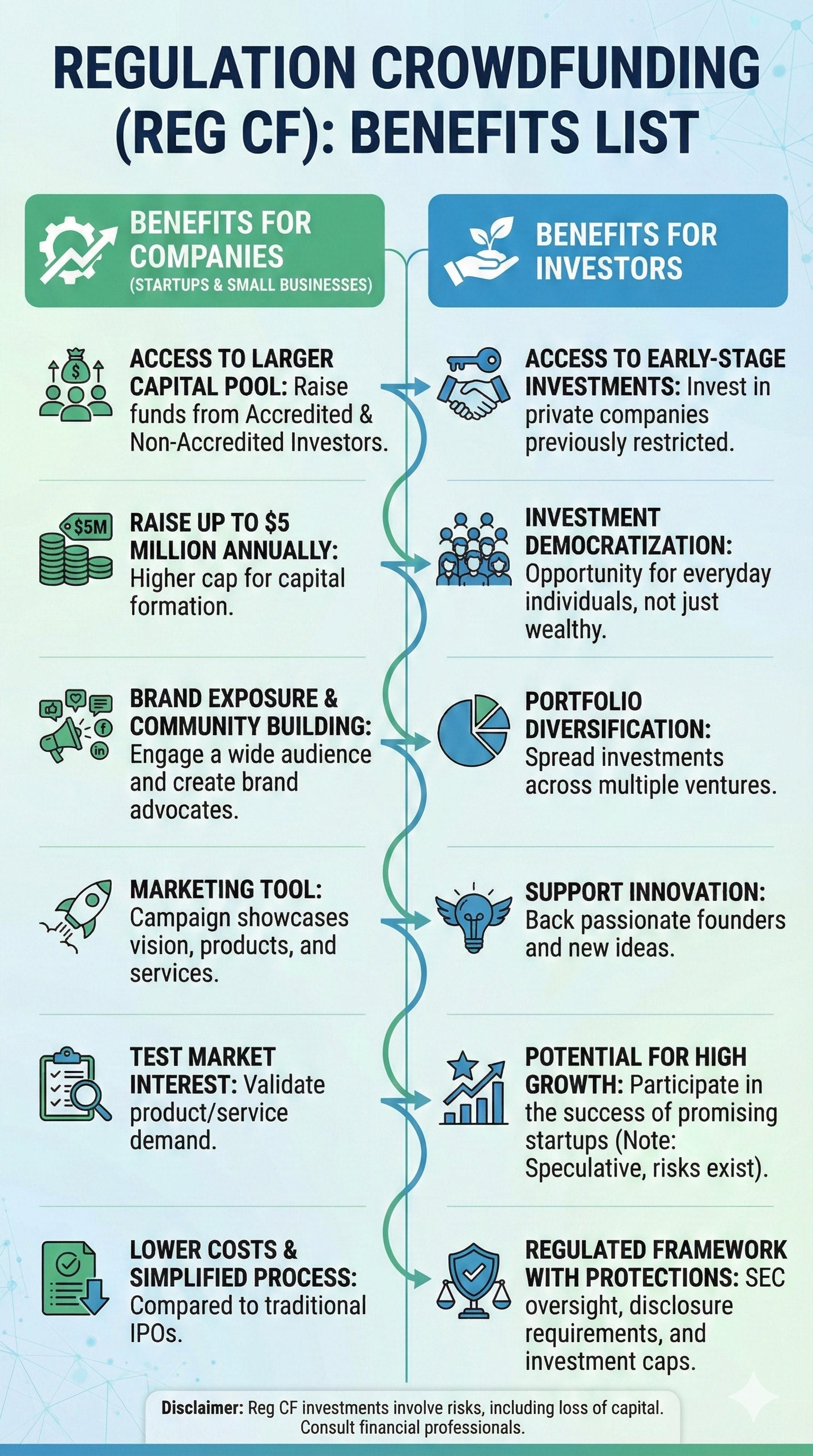
High Success Probability Plan for Raising Funding via Regulation Crowdfunding (Reg CF)
At FAIM, we believe that crowdfunding can provide many benefits for our customers and for us as a company. It can build a great deal of customer loyalty. Like our planned tokenized rewards platform, it goes beyond a transaction when someone invests for as little as $100 to join us on our journey. Sign up to our newsletter for news on when we may roll out opportunities to join in.
Regulation Crowdfunding (Reg CF) under Title III of the JOBS Act allows U.S.-based companies to raise up to $5 million in a 12-month period from both accredited and non-accredited investors through registered online platforms. This democratizes access to capital but requires strict SEC compliance, including disclosure filings and advertising limits. Success rates for Reg CF campaigns are high when executed well—analysis of over 6,000 campaigns shows a failure rate of just 7.9%—but hinge on preparation, marketing, and momentum building.
To maximize success probability (aiming for 80-90% based on best practices), follow this step-by-step plan, drawing from proven strategies across hundreds of campaigns. Allocate 3-6 months for pre-launch preparation.
Step 1: Assess Eligibility, Set Realistic Goals, and Validate Fit
- Confirm eligibility: Ensure your company is U.S.-based, has a specific business plan, isn't an investment company or SEC-reporting entity, and has no "bad actor" disqualifications (e.g., recent fraud convictions among key personnel). Review for any prior Reg CF non-compliance.
If in a regulated industry (e.g., fintech), consult legal counsel early to navigate hurdles.
- Define fundraising goals: Calculate exact needs based on runway, growth milestones, and use of funds (e.g., product development, marketing). Set a minimum target as low as feasible (e.g., $100,000-$500,000) to hit it quickly—campaigns reaching 30% in the first week are far more likely to succeed.
Aim for the $5 million cap only if you have strong traction; most successful raises are under $1 million to maintain momentum.
- Validate market fit: Test if your industry suits crowdfunding—consumer products, tech startups, and creative ventures thrive due to broad appeal, while B2B or highly regulated businesses may struggle.
Survey potential investors or run a "testing the waters" (TTW) campaign on your chosen platform to gauge interest without formal commitments, including required disclaimers.
- Success tip: Align goals with investor limits—non-accredited investors are capped at 5-10% of their income/net worth (inflation-adjusted; e.g., ~$2,500 minimum or up to no hard cap for high earners). Focus on micro-investments ($100-$500) to broaden participation.
Step 2: Assemble Your Team and Ensure Compliance
- Build a core team: Include legal/financial experts for SEC filings, a marketing specialist for promotion, and an investor relations lead for communications. Assign roles for due diligence, content creation, and analytics monitoring.
- Prepare key documents: File Form C with the SEC via EDGAR, including business description, use of proceeds, risks, team bios, and financial statements (certified for small raises, audited for larger ones over $535,000).
Create a detailed business plan with projections, competitive analysis, and visuals. Substantiate all claims (e.g., IP ownership) to pass platform due diligence.
- Choose a platform: Select a registered funding portal or broker-dealer like DealMaker, Wefunder, StartEngine, or Republic based on fees (5-10% of raise), audience fit, and support services (e.g., marketing tools). All offerings must occur exclusively on one platform.
- Compliance focus: Adhere to advertising rules—limit off-platform promotions to "tombstone" notices (basic facts like amount, terms, and platform link) without hype or projections. Disclose promoter compensation. Avoid "conditioning the market" by ramping up non-offering marketing pre-launch.
Budget $10,000-$50,000 for legal/compliance costs.
- Success tip: Engage professionals early—campaigns with transparent, audited financials build trust and convert 4x better.
Step 3: Develop a Robust Marketing and Community-Building Strategy
- Craft your narrative: Tell a compelling story emphasizing your mission, problem solved, and investor benefits (e.g., equity upside). Produce a professional 2-3 minute video—campaigns with videos raise 4x more.
Design an engaging offering page with short paragraphs, graphics, and FAQs; make the "above the fold" section irresistible.
- Build pre-launch buzz: Grow an email list (aim for 1,000+ subscribers) and social media following through teasers, webinars, and content marketing (blogs, videos). Avoid mentioning the raise pre-launch to comply with rules.
Frontload commitments: Secure 30-50% of your goal from friends, family, customers, and inner circle before going public— this creates FOMO and social proof.
- Multi-channel promotion plan: Use email (personalized campaigns), social media (targeted ads on LinkedIn/Facebook), PR (media interviews pitching the opportunity), influencers (engaged niches with disclosures), and paid ads (Google/Meta, starting small to optimize).
Budget 10-20% of raise for marketing; refine with A/B testing.
- Offer incentives: Tier perks (e.g., branded items, early access) to encourage larger investments without being the main draw. Introduce limited-time early-bird deals and stretch goals for mid-campaign boosts.
- Success tip: Target "low-hanging fruit" first (existing customers/lists) for high conversion— they invest 2-3x more readily.
Use analytics to track traffic sources and adjust (e.g., focus on high-ROI channels).
Step 4: Launch and Actively Manage the Campaign
- Launch timing: Go live mid-week (Tuesday/Wednesday) for max visibility; run 30-60 days to maintain urgency.
- Drive momentum: Blast emails/social posts on day one. Update weekly with progress, Q&As, and milestones—active communication boosts engagement 30%.
Respond to comments promptly; host webinars for two-way interaction.
- Monitor and pivot: Track metrics (investors, raised amount, conversions) via platform tools. If stalling, amp up ads/PR or add perks. File SEC updates (Form C-U) at 50% and 100% milestones.
- Success tip: Campaigns with regular updates and social proof (testimonials, media coverage) see 20-30% higher funding.
If exceeding goals, announce stretch targets to sustain growth.
Step 5: Post-Campaign Follow-Through and Reporting
- Close and fulfill: Thank backers personally; deliver perks/rewards on time to build loyalty. Issue securities promptly.
- Ongoing compliance: File annual reports (Form C-AR) within 120 days of fiscal year-end, including financials, until termination criteria (e.g., liquidation or repurchase).
Maintain investor relations with quarterly updates to turn them into advocates for future rounds.
- Leverage for growth: Use the community for feedback, beta testing, and marketing. Note securities have a 1-year resale restriction.
- Success tip: Strong follow-through sets up sequels—many companies raise multiple times via Reg CF.
Risk Mitigation and Overall Tips for 90%+ Success Odds
- Budget breakdown: 50% for operations/product, 20% marketing, 15% legal/compliance, 15% contingencies.
- Common pitfalls to avoid: Underestimating marketing (key to 80% of success), poor video/page design, or non-compliance (e.g., hype in ads).
- Metrics for high probability: Aim for 30% funded in week 1, 50+ investors early, and 70% conversion from page visits via compelling content.
- Seek expertise: Partner with experienced firms for PR/ads; consult SEC resources or attorneys for tailored advice. This plan, if executed diligently, positions your campaign among the top performers by emphasizing preparation, compliance, and investor engagement.
Read more

We’re excited to introduce the “Digital Art Asset (DAA)”. This isn't just a buzzword, it is the bridge connecting the cherished traditions of physical collectibles, like classic athlete player card...
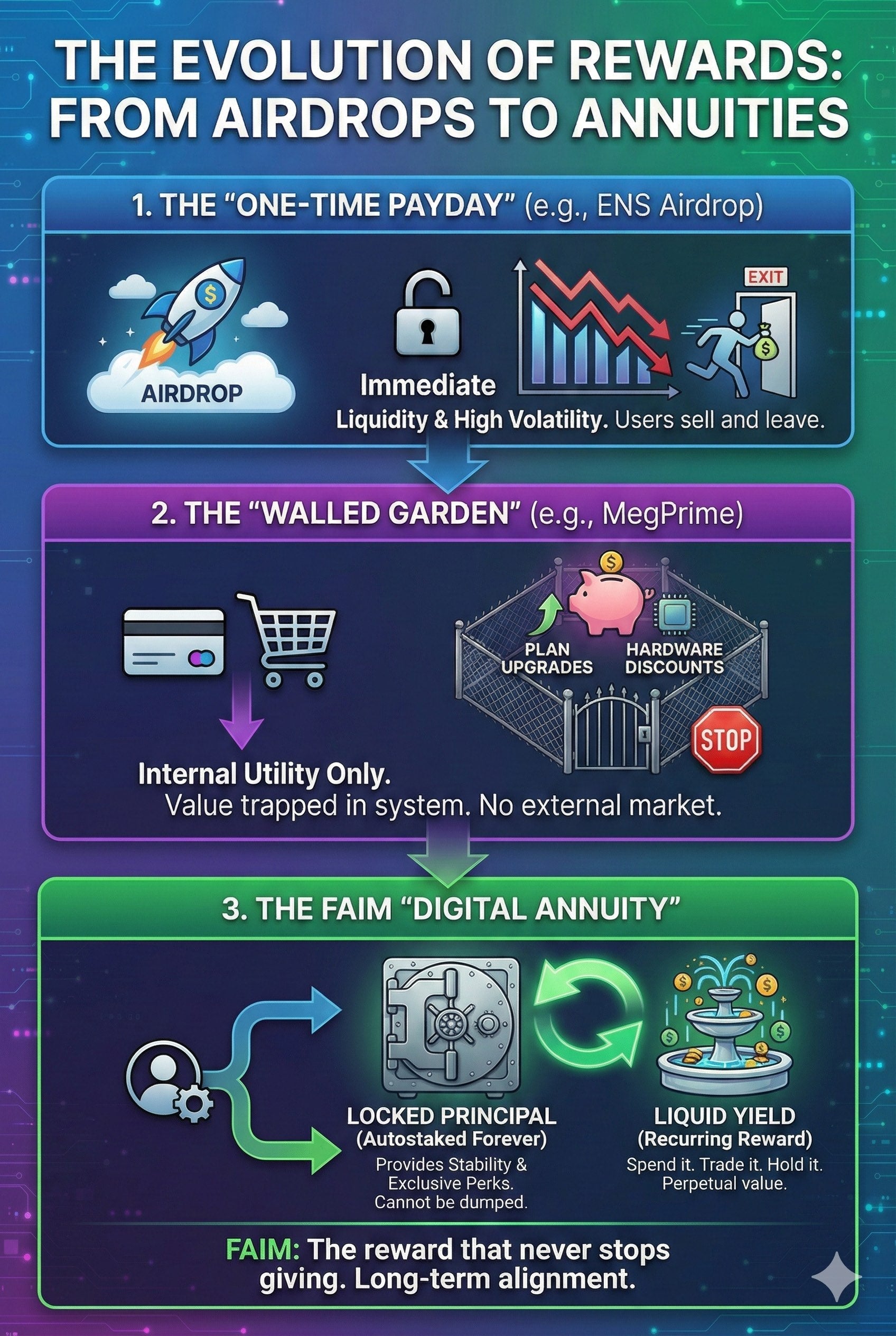
We are moving away from the era of “one-and-done” token airdrops and into the era of perpetual loyalty. With FAIM, your rewards don’t just sit there—they work for you, forever.